
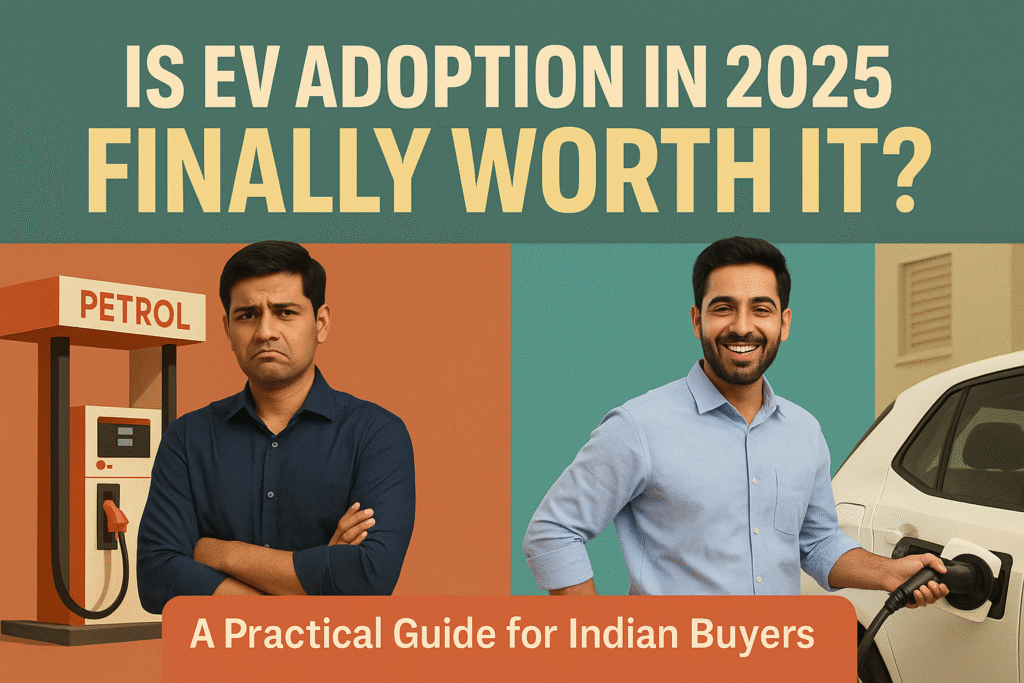
EV Adoption in 2025 have gone from futuristic dreams to real options parked in Indian garages. But is 2025 finally the year when EV adoption makes sense for the average Indian buyer? Let’s dig into the facts, recent developments, pros, and challenges to help you decide.
⚡ The Rise of EVs in India: 2025 Snapshot EV Adoption in 2025
In 2025, India’s EV ecosystem is thriving more than ever before. With improved charging infrastructure, government incentives, and increasing consumer demand, the electric mobility sector is no longer just for the elite or environmentally conscious—it’s for everyone.
Here’s what’s different in 2025:
- Major cities have public fast chargers within 5 km range.
- Battery prices have fallen by over 30% since 2020, making EVs more affordable.
- EV car models now come in all price segments, from ₹7 lakh to ₹30+ lakh.
- Ola, Tata, Mahindra, and MG have introduced 3rd-generation EVs with better range and reliability.
🚗 Pros of Adopting an EV in 2025
1. Lower Running Costs
Petrol prices are hovering around ₹110 per litre in many cities, while EVs run on electricity that costs a fraction. On average:
- EVs cost ₹1–₹1.5/km to run
- Petrol/diesel cars cost ₹7–₹10/km
Over 5 years, you could save ₹1–₹2 lakh or more on fuel alone.
2. Government Support & Subsidies on EV Adoption in 2025
Schemes like FAME-II, state-level EV subsidies (e.g., Delhi, Maharashtra), and GST reductions make EVs more accessible:
- Up to ₹1.5 lakh subsidy for personal EVs
- Road tax exemptions in many states
- Income tax benefits on EV loans under Section 80EEB
3. Better EV Models in 2025 on EV Adoption in 2025
You’re no longer limited to just 1-2 options. In 2025, you have:
- Tata Punch.ev, starting at ₹9 lakh
- MG Comet, a compact city EV
- Mahindra XUV400, a practical SUV
- BYD and Hyundai’s long-range EVs
These offer ranges from 250 km to 600 km on a single charge.
4. Growing Charging Network on EV Adoption in 2025
Charging is easier than ever:
- Indian Oil, BPCL, and private players now have EV chargers at thousands of petrol stations.
- Home charging kits are being bundled with new EV purchases.
- Apps like Tata Power EZCharge, ChargeGrid, and Statiq help you find and book slots.
🚧 Challenges Still Facing EV Adoption in 2025
Despite big strides, EVs still come with a few pain points:
1. High Initial Cost
Even with subsidies, the upfront cost is higher than ICE (Internal Combustion Engine) vehicles. A comparable petrol car may cost ₹2–3 lakh less.
2. Charging Infrastructure in Small Towns
While metros are covered well, Tier-2 and Tier-3 cities are still playing catch-up in terms of reliable public chargers.
3. Battery Replacement Anxiety
Though most EV batteries last 7–10 years, replacement costs can be over ₹3 lakh, which concerns long-term buyers. However, many brands now offer 8-year battery warranties.
🧠 Who Should Buy an EV in 2025?
EVs are a smart choice if:
- You drive primarily within city limits or on fixed routes.
- You want to save on fuel and maintenance long-term.
- You have charging access at home or in your society.
- You’re eligible for state EV subsidies.
If you’re a long-distance traveler, truck driver, or living in rural areas, you may want to wait until 2026–2027, when nationwide charging coverage improves.
🌱 The Environmental Bonus
Switching to EVs in 2025 isn’t just about cost. It’s a step toward reducing air pollution, especially in India’s heavily polluted cities like Delhi, Lucknow, and Mumbai. EVs have zero tailpipe emissions, which can significantly cut down your carbon footprint.
✅ Final Verdict: Is It Worth It?
Yes—for most urban and semi-urban consumers, adopting an EV in 2025 is finally worth it. The cost gap has reduced, the infrastructure is maturing, and the tech is reliable. Plus, the satisfaction of contributing to a cleaner environment is unmatched.
🔍 Quick FAQ
Q: Should I buy an EV or a hybrid in 2025?
A: If your daily drive is under 100 km and you have home charging access, go full EV. Otherwise, hybrids are a good bridge option.
Q: Can I take EVs on long highway trips?
A: Yes, but plan ahead. Look for fast chargers along the route using EV apps.
Q: Which is the best budget EV in 2025?
A: Tata Punch.ev and MG Comet are great for city driving under ₹10 lakh.
Home Page: https://blog.njankari.com/